Sunday, April 15, 2012

Catching Up: "Dolphin Tale"


 2.5 / 5 

Take a look at that poster and tell me what happens in Dolphin Tale.  You could do it without seeing a frame of the movie.  But some films, you just don't fight.

Dolphin Tale is one of those movies.  There's absolutely nothing particularly noteworthy or even especially good about Dolphin Tale, but it's a charmer nonetheless, the cinematic equivalent of a cute little puppy just sitting there waiting to be loved.  Or, at least, liked a whole lot.

The problems in the movie aren't all that worth mentioning; most of them are what you would expect from a movie made for undiscerning children.  There's a young child actress who mugs insanely for the camera, as if her parents are standing just beyond the edge of the screen shouting, "A casting agent might be watching!"  There are not one but two grizzled, veteran actors who are too good for this stuff, but who are doing it anyway, possibly not just for the paycheck but because they think this is the kind of movie that they can take their grandkids to see.  They're right.

There's also a wonderfully adorable dolphin who gets caught in a crab trap and loses his tail.  "No dolphin has ever survived without its tail," the widower oceanographer (Harry Connick Jr.) says ominously, while the young boy (Nathan Gamble) who found the dolphin looks on, accompanied by his pretty, widowed mother (Ashley Judd).  That the oceanographer and the mother don't fall madly but chastely in love is a bit of a surprise.

The movie takes place in Florida, and it perfectly captures the laid-back, amiable atmosphere of a coastal town that could hardly be more low-key.  Sawyer, the young boy at the center of the story, desperately needs to find something to do, and he's lucky to live in the kind of place where exploring is still encouraged, particularly by old-salt sea captains like the one played here by Kris Kristofferson.

He finds the titular dolphin dying on a beach, and becomes intrigued by the rescue effort.  The dolphin and the boy bond, and while it's easy to show movie audiences how a dog or a horse and a boy might bond, a dolphin presents some particular challenges that the filmmakers meet quite nicely.  But the dolphin will need a new tail, and Sawyer is struck by inspiration when he goes to visit his Iraq War-veteran cousin, who has lost the use of his legs in combat.

That's where Morgan Freeman comes into play, with his sonorous voice and his uncanny ability to make even the most underwritten character feel at least moderately real.  He brings such unexpected conviction to the throwaway role that you can't help but smile when he finds that he, too, has come to love this plucky little dolphin.

It's all serviceably directed by Charles Martin Smith, who starred in one of the most memorable of all wildlife films, the 1983 Disney movie Never Cry Wolf.  Dolphin Tale is a long, long way from Never Cry Wolf for many reasons, not the least of which is that, sadly and puzzlingly, most of its underwater characters aren't real.

In a bone-headed move, the filmmakers decided that modern young viewers would rather see dolphins, sea turtles, stingrays and fish rendered in computer animation.  The opening shots of Dolphin Tale are cringe-inducing because instead of offering up the real wonders of the ocean, they're animated.  So, too, are shots of the residents of the aquarium at the heart of the film, and the fake characters sap authenticity from the film at key moments.  It's hard to share (much less believe) the look of wonder on the faces of characters when you know that they're looking at green screens with fake fish added in later.

Dolphin Tale should have celebrated the beauty of the oceans, not the abilities of CG animators.  But the story at its heart is nonetheless hard to resist.  If you need a pleasant time-filler, or want to keep kids and yourself occupied on a rainy day, it's a good choice.

Viewed April 9, 2012 -- Blu-ray

Friday, April 13, 2012

"The Cabin in the Woods"


 2.5 / 5 

The Cabin in the Woods is a master's thesis in Fanboy Filmmaking, a movie that slyly blends and bends genres with flair and ease, but that is so self-satisfied it's surprisingly hard for outsiders to like.  You'll most enjoy The Cabin in the Woods if you are familiar with the work of Joss Whedon and Drew Goddard.

Whedon created fanboy-favorite TV shows like Buffy the Vampire Slayer and Firefly, which were like pop-culture secret societies -- if you didn't follow along from the beginning, you weren't invited to join the fun.  Goddard was a key writer on Lost, an insider show if ever there was one, and wrote Cloverfield, a movie I liked a lot even though I didn't understand the intricately designed backstory created on the Internet almost as a secret handshake that you sensed the movie's creators would have liked to have made a requirement for buying a ticket.

The Cabin in the Woods is simultaneously more and less accessible than any of those TV shows and movies.  It's enjoyable enough for hip, smart mass audiences, but will be most appreciated by people who understand the many in-jokes and sardonic winks the movie throws at its audience.

That The Cabin in the Woods isn't just about said cabin is made clear with the first shot, which isn't of the college students who are about to venture into the woods to find the rustic abode, but of actors Richard Jenkins and Bradley Whitford as workers in some vaguely sinister looking, high-tech lab.

This part is hinted at in the film's trailer -- the cabin is much more than it seems, and the kids are going to discover this at some point.  Whedon and Goddard are up front about this much: The Cabin in the Woods isn't a horror film, it's a comedy, and its humor relies on us knowing what's about to happen to the most archetypal group of characters to assemble since Oceanic 815 crashed in the South Pacific.

That director Goddard was so intergral to many of the best episodes of Lost is something I didn't realize until after I saw The Cabin in the Woods, but it makes sense now, because the central mystery to be solved in the movie -- why exactly these kids are here to be slaughtered -- is more than a little similar to where Lost was headed before veering so disastrously off course.

Yet, that pop-culture in-breeding is also what unexpectedly softens the blow of The Cabin in the Woods.  It's all a little too manufactured to appeal specifically to the tastes of people who spent a lot of time watching similar stories play out over the course of hundreds of hours on TV.  In many ways, The Cabin in the Woods is too smart for its own good; it can't stop laughing at its own jokes long enough to offer something really new.

Oh, it's a good deal of fun while it all plays out, all right.  Yet in its final revelations, The Cabin in the Woods is just too bloody familiar.  It takes the worst of '80s slasher films and mixes in the best of the science-and-literature-based pop culture touchstones of the '00s, but that's about the extent of its innovation.  Grafting one kind of story onto another is clever and so well done that it elicits generous laughs from knowing audiences.  But that's the thing: Enjoyment of a film shouldn't be predicated on being in the know.

The Cabin in the Woods stands on the shoulders of some great entertainment that is revered among people (me among them) for whom Comic-Con is one of the cultural highlights of the year.  For them (or, if you prefer, us), it's entertaining, daffy fun.

The big trouble is, it can't really stand on its own.

Viewed April 13, 2012 -- Arclight Sherman Oaks

Wednesday, March 28, 2012

"The Hunger Games"


 2.5 / 5 

The Hunger Games misses a fascinating opportunity to be the rarest kind of mainstream film: an angry satire.  Instead of, as the book's dust jacket offers, exploring "the effects of war and violence on those coming of age," this big-budget, high-stakes adaptation of a thoughtful novel is instead a movie that accepts the notion that kids killing kids could be mainstream entertainment.

No, not could be.  It is.

With its determination to be as faithful as possible to its source material rather than using it merely as a foundation, The Hunger Games never really pauses to reflect on the idea that adults have decided not only to pit children against each other, but that an entire industry -- an entire culture -- has been built around the central notion of a massive reality show in which there will be only one survivor, literally.  He or she will be the person who murders the most competitors.

It's a distasteful premise, but The Hunger Games was a literary sensation, so a film version had to be made.  As such, it's a skillful film, filled with compelling, heroic performances.  But it's also a film afraid to take a stance; it neither stops to reflect on the concept long enough to reach any conclusions, or be vicious enough as an action-thriller.  The Hunger Games is mostly toothless, when it should be gnashing those teeth in anger or satirical derision.

For, indeed, we live in a society that is perilously close to the one depicted here, when fortunes are made by people who create entertainment that looks uncomfortably like "The Hunger Games" the TV show.  The basic idea is this: As retribution for a violent uprising 75 years earlier, a central government has decreed that two children from each district in its vast purview will fight to the death in a televised reality show.

Over time, this has become big business.  The entire year, it seems, revolves around the Hunger Games, though just why the people are hungry enough to play these games is glossed over in the film version.  The lottery to determine the players is won (or lost, depending on how you look at it) by two kids from District 12, this fictional nation's version of Appalachia.  Katniss Everdeen (the luminous, determined Jennifer Lawrence) and Peeta Mellark (Josh Hutcherson, stalwart and brave) are the contestants.

A long, engaging sequence shows their preparations in the Capitol City (never mind the actual definition of the word "capitol," which has only one meaning in English; this is the spelling we're given), a place that looks a bit like the Wicked version of Oz crossed with Logan's Run.  It's the best part of the movie, by far, convincing in its attitude and mesmerizing in the way not a single person stops to think -- these are children here.  The sequence ends with a quiet, lovely exchange of dialogue between Katniss and Peeta ... and then the Games begin.

But how can there be cheering for this kind of sport?  The Hunger Games wants us to be happy when Katniss or Peeta gets the upper hand, but I found it impossible ever to forget what we are witnessing here.  That said, both Lawrence and Hutcherson give mesmerizing performances, committing themselves so fully to the characters that they unintentionally beg some questions.  The biggest is, If these kids are so smart, what if they just refuse to play the game?  What would happen if no one played?  The book at least hints at the answers; the movie has no time for nuance and ambiguity.

There are other big plot concerns.  The game is played under a man-made dome, something that comes clear almost by accident.  There are deus ex machina moments galore, some built into the game (wealthy sponsors can send care packages to players they like), some not -- only when it's convenient for the plot do we learn that the big, sci-fi-looking Control Room can create obstacles out of whole cloth.  Need a giant, snarling beast to take down a player?  Coming right up.  It's both too convenient and too arbitrary.

More damaging from a storytelling standpoint is that there are just too many characters.  Like the Harry Potter adaptations, it's impossible to keep track of who's who unless you've read every word of the books.

Likely, most of the audience will have done just that.  For them, the death of one key supporting player may feel real and vital; to non-readers, it seems more like another plot point checked off a list.

Shot in almost relentless close-up, the movie tries hard to get us to care, but the outcome is too pat and clear right from the start.  And by the time the winning move is made, the feeling is less catharsis than a simple relief that the thing is over.

The script may sacrifice moments of clarity or perspective in order to put all of the important bits from the book on screen, but the actors give it their all and the production is handsome and sometimes witty to look at.

More emotionally compelling than the Harry Potter movies, The Hunger Games is starkly effective as entertainment, but never tries to comment on what it's showing.  What could have (and possibly should have) been burning, timely satire instead is a sleek, high-end Hollywood product that offers up death as sport with nary a nod of the head, wink of the eye or disapproving scowl from the filmmakers.

At the risk of sounding like a curmudgeonly old grown-up, the fact that it's all so entertainingly and slickly told, and that so much money and time was lavished upon the need to get death and violence to look this good, is more than a little worrisome.

Viewed March 27, 2012 -- Arclight Sherman Oaks

Friday, March 23, 2012

Favorite Films: "Field of Dreams"


I didn't grow up in a "sports family," though in high school and college I fell into friendships with people who loved baseball.  I tried to learn the game, but it didn't take long for me to realize that I would never love baseball, not like they did.  It was their intense passion for the game, their unwavering commitment that drew me to them.

Watching Field of Dreams again, now that a lot of life has passed, made me think of them and their love of the game, which is at the core of this staggeringly good fantasy. You may know the justifiably famous monologue delivered by James Earl Jones late in the film: "The one constant through all the years, Ray, has been baseball. America has rolled by like an army of steamrollers. It's been erased like a blackboard, rebuilt and erased again. But baseball has marked the time." Hearing it again got me thinking ...

If I never had a particular fondness for baseball, what is it about this film that resonates so deeply?  I think back to those friends -- obsessed with baseball, defined by baseball, just as I was obsessed with and defined by movies and others, I would come to discover, were defined by other things: comic books, music, politics.  Indeed, replace the word "baseball" in that speech with any of those things and it remains just as valid: "It reminds us of all that once was good and could be again."

Isn't that what defines anyone's passion?

Its ability to be simultaneously about baseball and about, well, anything that moves Field of Dreams way out of the realm of sports movies and into a completely different dimension.  Field of Dreams has at its big, generous heart something that today's Hollywood dares not touch: faith.

The "Ray" mentioned in Jones's speech, of course, is Ray Kinsella, played with low-key affability by Kevin Costner, who has never been better than this.  Though he lives in Iowa, he's a Berkeley-educated liberal who faces a remarkable test of faith.  That's a remarkable point to consider given that, two decades on, Hollywood (if not the rest of the world) acts as if faith is reserved for Southern conservatives.

It begins when this near-broke farmer hears The Voice, which sends him the memorable words: "If you build it, he will come" -- not bothering to offer any helpful pointers like what those pronouns might mean.  The greatest strength of Field of Dreams may be its willful insistence to explain absolutely nothing that happens on screen; even among fantasy films, it's rare to find one so confident that it moves straight through the story, never trying to clarify what is inexplicable.

Ray's solution leads him to find reclusive writer Terrence Mann (Jones) and the long-dead Doc Graham (Burt Lancaster, impossibly charming), who in turn underscore the film's real subject: It's not about baseball, it's about dreams.  It's about how life changes what we look like and how we think, but cannot change what we believe and what we yearn for.

In a film brimming over with emotionally honest scenes, none is better than the interplay between Ray and Doc Graham, who almost achieved his dream of becoming a professional baseball player, but didn't.  Ray is incredulous that the missed opportunity didn't result in a life of regret and bitterness.  No, the doctor explains, the real shame would have been if he hadn't lived the rich and happy life that came after.

It's in that quiet moment, a scene that ends with a smile that is at once mysterious and altogether genuine, that Field of Dreams proves why it remains such an extraordinary, rewarding movie.

In ways I never realized before, it's quite a brave film, particularly when seen in today's culture of reality-TV-driven instant fame and obsessive need to succeed. Filled with characters whose lives seem, on the surface at least, to have been ruined by the very thing they love the most, Field of Dreams presents us with a hard-won truth: that happiness and fulfillment are obtained not by achieving material success, but by believing in impossible dreams.

Friday, March 9, 2012

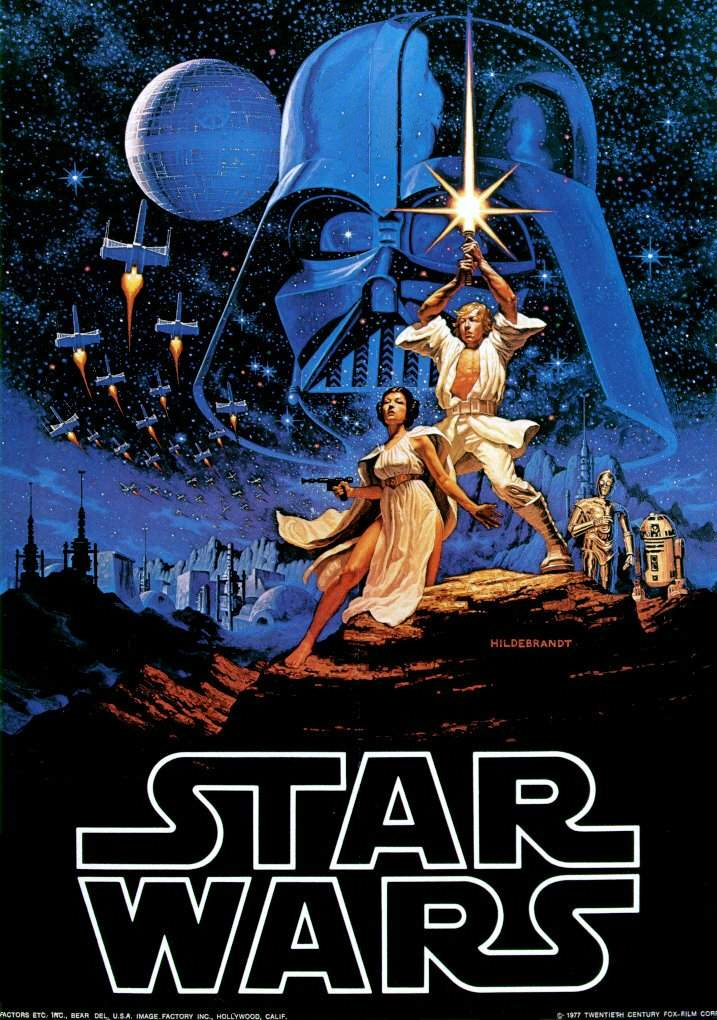
If "Star Wars" Were Released Today


The critical drubbing given to John Carter got me wondering … what would these joyless reviewers have to say about Star Wars if it came out today?  I have always been and remain a big fan of the Star Wars movies, so what’s written below certainly does not reflect my opinion of them … but perhaps does reflect the way today’s elite critics might see the original Star Wars if it were to make its first appearance in today’s world. 

(For the record, I loved John Carter … and I didn’t watch it to "review the budget."  It transported me to another world.)  Here’s what I think a highbrow critic might have written were it to come out today. The below is fully imaginary and in no way reflects my own view of Star Wars.

*****************************************************************

STAR WARS
(2 out of 5 stars)

If robots who talk with fussy British accents, men in gorilla suits and endless laser-gun fights are your thing, then by all means give Star Wars a try, but don’t say you weren’t properly warned.  It’s a movie with such lousy buzz that even exhibitors who got advance screenings wouldn’t book it into their theaters.

To help defray undoubted losses on the reported $10 million budget – that’s twice the cost of an average movie these days – Fox finally managed to dump this bloated Saturday-matinee kiddie feature into a measly 32 screens on Memorial Day, a holiday better known for quick vacations than spending time in the dark.  At this rate, Fox will take whatever it can get, though its executives were smart enough to sell the rights away to writer-director George Lucas, who showed so much promise with the vastly superior, smarter American Graffiti.

In Star Wars, no-name actors (the biggest marquee name is Debbie Reynolds’ daughter) do their best to recite the kind of dialogue that might have already seemed dated when Buster Crabbe used it in the ‘30s.  They’re joined by some pained-looking, senior-citizen British names like Alec Guinness and, briefly, Peter Cushing, who ostensibly lend an air of credibility to the otherwise brainless goings-on, which have all been done before in Western and war movies -- for a fraction of the cost.

It’s a shame, really, because there are some nice touches, including truly groundbreaking special-effects work and a rousing score by John Williams that cribs more than a bit from Holst’s The Planets, but otherwise enlivens the ridiculously and unnecessarily convoluted plot.

See if you can keep up with me here: In another galaxy “a long time ago” (how’s that for originality?), an Imperialist government is waging a “civil war,” though exactly who is fighting who and why is never even addressed.  Note to the young director: If you’re going to use the word “war” in your title, you might do the audience the courtesy of explaining what the war is all about.

All we know for sure is the bad guys are so bad that the chief villain, the awkwardly named Darth Vader (yes, it’s that kind of a B-movie – and the hero’s last name is Skywalker), traipses around wearing black … with a cloak, no less.  He’s built a death ray that can blow up entire planets, so take that, Mr. Khruschev.  Someone has stolen the plans for the space station and hidden them inside a robot with instructions to deliver them to an old man on a planet that’s entirely made out of desert.

Meanwhile, a young boy finds the robot and gets hunted down by the bad guys while he learns about an ancient religion from an old neighbor, and together off the two go to hire a solider of fortune to help them get the robot back to where it belongs – and, of course, wouldn’t you know it, they stumble right into the path of the war, where they become unlikely heroes and save the day. 

If you’re exhausted reading that, just wait until you see Star Wars – though, given the utter lack of faith theater owners and Fox seem to have in it, it will be quite a feat if you do see it, outside of a 10 a.m. show some Saturday.  Star Wars may be just fine for the kids, but they’re not the audience that matters to Hollywood, and really Star Wars is just a small pit stop on the way to the summer’s most eagerly awaited films for grown-ups, like A Bridge Too Far, The Deep and Fox’s lavish The Other Side of Midnight.

But Star Wars is worthy of attention not only because of its exorbitant budget and what it says about the gambles involved with selecting and making films – but also because there are a few gems buried in this breathlessly paced nonsense, like the aforementioned score and the uncanny ability of Alec Guinness to speak lines like, “If you strike me down, I shall become more powerful than you can possibly imagine” with a straight face.

Particularly uncritical children may enjoy it; for adults, it’s a loud, crashing bore, an ill-advised attempt to transfer the undeniable charms of Buck Rogers and Flash Gordon into a big-screen, mega-budgeted spectacle.

Perhaps the low point of a film rife with them is the big cross between a bear and a dog, played by a man in a fur suit.  Just how unsophisticated did Lucas think his audience would be?

Star Wars will come and go quickly, so if you really want to try to make sense of its byzantine plot (communicated at the start by a visually impressive, endlessly wordy “introduction” that scrolls up the screen), you’d better check it out while you can; with 32 theaters in the entire country playing it, it will have closed and be ready to move on to smaller markets within the next couple of weeks.  Just don't say I didn't try to warn you.

Without doubt, Star Wars isn’t entirely unworthy – any movie that features American Graffiti’s Harrison Ford  shouting “yahoo!” can’t be all bad – but for those who prefer even a sprinkling of substance to their movie entertainment, this is one surround-sound "spectacle" you can skip.

Almost everything in this barely released, barely marketed mess of a movie has been done before, more cheaply and with infinitely greater charm and memorability.  For some, Star Wars may prove a decent momentary diversion (best to check your brain at the theater door) before we get on to the meat of the summer.

Lucas has said he created Star Wars as a throwback and homage to the kinds of movies he grew up with.  Sorry, Mr. Lucas, everything you’ve put up on screen has been done before – using 99.5% less money – and been done better. I liked Star Wars a lot more the first time they did it, back when it was called Buck Rogers.   

Wednesday, March 7, 2012

"Chronicle"


 4 / 5 

The big-budget directors and studio heads behind the Batman, Spider-Man and occasional Superman movies must be having some sleepless nights, because seemingly out of nowhere comes Chronicle, a film whose budget that would barely cover craft services on one of their productions and no big-name stars, and it's possibly the best superhero movie since Richard Donner's 1978 Superman.

What Chronicle gets so right is what is sorely lacking in superhero films of the past two decades: a giddy, zippy sense of fun.  Movies like Spider-Man and The Dark Knight labor under a dark and brooding melancholy that even cast a pall over the last Superman movie; they're the cinematic equivalent of goth girls -- needing to prove they are cool by alternating between anguished and impassive.

So, here's Chronicle, which spends a good chunk of its time reveling in the loopy fun that three teenagers have when they discover they are imbued with super powers.  This isn't a quick montage of Peter Parker learning to be Spider-Man -- it's the heart of Chronicle, and benefits from the movie's sense of style.

This is a "found-footage" movie, an odd sub-genre that more or less wore out its welcome about a week after The Blair Witch Project opened, but saw a resurgence with the endless Paranormal Activity movies.  Here, it's less distracting, though arguably an odd choice, as the movie might have benefitted even more from a less subjective camera.  The prodigiously talented filmmakers -- director Josh Trank and screenwriter Max Landis -- also go to amusing lengths to keep the "caught-on-video" concept going during the times no character could possibly be holding a video camera.

That's not a minor point, because the found-footage approach is a rather serious limitation in a movie that otherwise feels boundless.

That rather significant flaw has a counterpoint, though -- four, actually: the three lead actors and superior visual-effects work.  The actors are Dane DeHaan, Alex Russell and Michael B. Jordan, names no one would know but should, because they are remarkably compelling, equally capable of the jovial, light-hearted first half and the grand, action-packed second.  DeHaan, in particular, has a challenge, because he's both the central character and, ultimately, the villain of the piece.

Bowing, perhaps, to the popularity of being "dark," Chronicle focuses on DeHaan as the social outcast whose powers bring him instant fame, at least of the high-school sort.  He also has a notably difficult home life that feels vivid and real: an alcoholic, out-of-work stepfather and a dying mother.  Russell is his cousin and only friend, and Jordan plays the most popular boy at school.  The three of them bond when, ducking out of a raucous party, they discover a buried alien crystal that imbues them with powers.

They don't realize what's happened.  At first, it's a lark, then it's a secret they share, then ... well, to say more would destroy the immense enjoyment of the film's story.  It's by no means original -- it's a superhero origin story, after all, and there are only so many ways one can become a superhero.  But it's freshly told, with a bounce and skip to its step that defies the dreary, rainy gray of Seattle, where the film takes place.  (It was shot, interestingly, in Vancouver and in Cape Town, South Africa.)

Adding to the pure rush of fun that comes with Chronicle are the film's remarkable visual effects, which are simultaneously showy and yet blended seamlessly with the action.  Superman famously promised "you will believe a man can fly," but Chronicle gives us three of them, plus at least three key scenes that take place right there in the clouds, as Andrew, Matt and Steve zoom through the clouds.  There aren't many movies that would risk playing out critical dramatic scenes with characters hovering in mid-air -- Chronicle both risks it and pulls it off.

Though I wasn't quite sold by the last-minute story twists Chronicle takes (plus, I missed the kind of identity a solid musical score could have given it), I was marvelously entertained throughout.  Without an ounce of self-importance, Chronicle comes blessedly free of the expectations foisted upon the gargantuan, $200-million "reboots" of major superhero characters.  From its approach to its characters, Chronicle is wholly original, in every sense of the word.

Viewed March 7, 2012 -- Arclight Sherman Oaks

Friday, March 2, 2012

"John Carter"


 4.5/5 

Intoxicatingly adventurous, marvelously grand, John Carter is the kind of movie modern filmmakers think they are making but that so often leave audiences feeling disappointed.  John Carter does not disappoint.

Watching John Carter, I experienced a lot of the same emotions I had when I was 11 years old, watching another movie unspool for the first time, another story about a reluctant hero on a desert-like planet who finds himself aiding a beautiful princess during a civil war in which a moving city with a death ray threatens to lay waste to an entire civilization.

John Carter does not invite comparisons to Star Wars -- it insists on them, because its source material, the "Barsoom" books by Edgar Rice Burroughs, inspired so much of that other outer-space saga.  Before I saw John Carter, I had little interest in science-fiction/adventure novels written 100 years ago; now, I can't wait to devour them, to learn which elements made it to screen and which didn't, to find out what happens to John Carter once this particular story ends, because John Carter left me wanting much, much more.  Even at more than two hours, it mostly flies by -- sometimes a little too hurriedly, its primary flaw -- and almost every moment enchanted me.

The ones that didn't are during the introduction and the climax, both of which feel like they are trying to cram too much action and story into too little time.  The opening scenes, particularly, are filled with dialogue that will make much more sense the next time I see the movie but mostly exist to set up the unbelievable adventure of a Civil War veteran named John Carter.

He's a natural, irrepressible fighter with an instinct to act first and ask questions ... well, preferably never.  Carter (played with a fun sense of movie-hero bravado by Taylor Kitsch) is a soldier of fortune during a war that was mostly about passion and deep-seated beliefs.  Carter wouldn't have cared if he was wearing blue or gray, as long as he got to carry his weapon and fight someone.  But the war is over, it has taken a toll on Carter, and he finds himself prospecting for gold in the Arizona desert, being chased by everyone who has it in for him -- in this case, both the Army and the Indians.  He finds a cave to hide in, but he's not alone, there's a strange-looking man with an even stranger-looking object in his hand, and as quick as you can say "Barsoom," John Carter finds himself on Mars.

In the novel, Carter has wondered about the beautiful red star in the sky.  In the movie, he has no idea where he is or how he got there, he has to figure it all out.  All he knows for sure is that wherever he is, he has amazing physical abilities.

In short order, Carter discovers that this strange place he's in is experiencing its own deadly civil war, and he's asked to fight for the side of ... well, how would he know if it's right or not?  But he does like to fight.  Since one side has a beautiful, scantily clad princess (the stunning Lynn Collins) who's doing the asking, he'll choose that side.  In the middle of it all are the native people of Mars, which in their language is called Barsoom, and if Carter has sympathies for anyone, it's probably them -- all they want is to live without being bothered by the endless warring of the human-types.

Carter wants to figure out a way to go home more than anything else, and the princess, Dejah Thoris, tells him she thinks she can help him.  So, we've got a war movie, we've got a road movie, we've got a fish-out-of-water movie and, thanks to words like "Barsoom," "jeddak," "Thark" and "Thern," we've got a hardcore science-fiction movie -- plus, of course, a classic action-adventure.

John Carter is all those things, but more than any of them, it's a "movie movie," an unabashedly entertaining story that pulls us in and teaches us what we need to know along the way.  Some audiences may have a problem with this -- director Andrew Stanton and screenwriters who include the Pulitzer Prize-winning author Michael Chabon assume the audience is smart enough to figure certain things out for themselves.  This is a movie that easily could have stumbled by endless scenes of two people telling each other things they clearly already know as exposition for the audience.

John Carter doesn't have time for extraneous things like exposition.  Much like The Wizard of Oz, it tells us just enough and lets us discover as we go.  It's one of the movie's most admirable qualities.  For much of its running time, you may find yourself a little lost -- but by the end, it's all quite clear.  (At one point, I was getting frustrated wondering why a certain mysterious character doesn't just end things right there, because that sure would be easier -- then the movie takes a moment to give him a fantastic scene in which he explains exactly why he does what he does.)

Andrew Stanton directed John Carter, and while it's reasonable to wonder if a director of animation has what it takes to make a big-budget, high-profile live-action film, well, remember this: Most of John Carter actually is animated, with a few live-action actors thrown in for effect.

Those actors acquit themselves very well.  If Taylor Kitsch is just the tiniest bit bland, remember the character is a bit of a cypher even to those who know him best.  Collins is both intelligent and great to look at, with the kind of "movie British" accent that plays up her royalty.  The voice actors, particularly Willem Dafoe, Samantha Morton and Thomas Haden Church as the tall, green Tharks, help create clear personalities among a race that, in the books, is described as being physically homogeneous.

John Carter has an extraordinary look.  It will be compared to the Star Wars prequels, I'm sure -- but John Carter does something those films didn't do: It takes the time to show us the environment, to get us familiar with this odd world, so meticulously designed and shot.

And then, at its core, is that princess -- and John Carter himself.  What I loved most, really, about John Carter was the way they fall in love, what a compelling, ingratiating romance this is.

The rushed ending and confusingly edited "final battle" is the movie's biggest liability.  There were more than a few moments in which I didn't quite understand who was doing what, or why, when I lost sense of the story and why this battle was important.  (I imagine the distracting 3-D conversion not only doesn't add anything here but actually detracts, since it's hard enough to make out everything in an action scene with such grand scope; my suggestion is to skip the 3-D option.)

John Carter ends with an implied promise that the character will return to the screen soon.  There are 11 books.  If they're all as expansive and simply entertaining as this one, I'll gladly sit through another 24 hours or so of John Carter.  It's a wonderful film, made for the cynic inside us all, the one who sits at a movie screen as the light goes down and says silently, "Dazzle me."

Filled with strange creatures, ancient mysteries, intense action and soaring wonder, John Carter fulfills that request: It dazzles and delights, and if you give it half a chance, you'll walk out with a giddy smile, feeling like a kid again, a kid who's just been shown what magic the movies can make.

Viewed at Regal L.A. Live -- Feb. 22, 2012